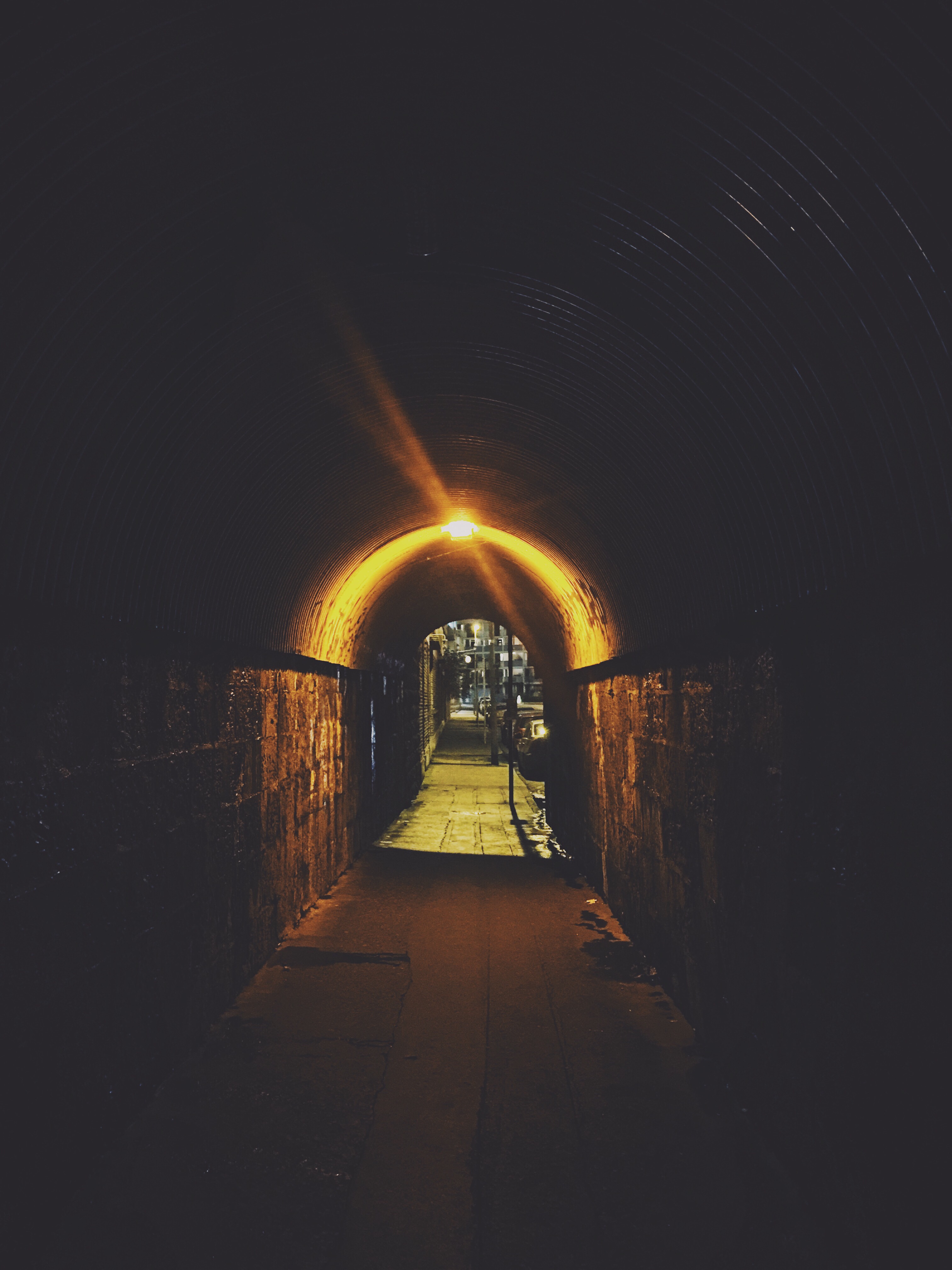
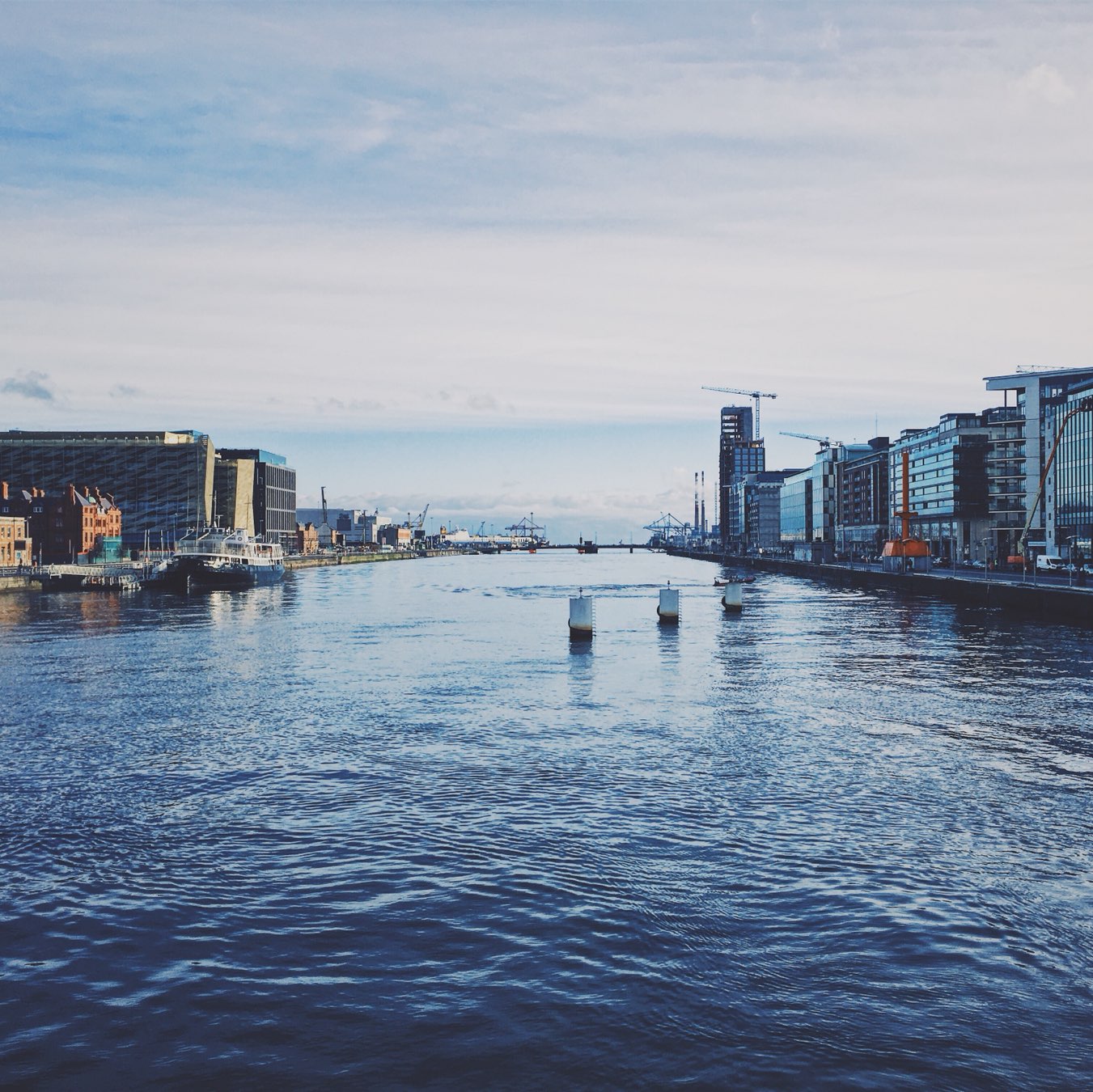
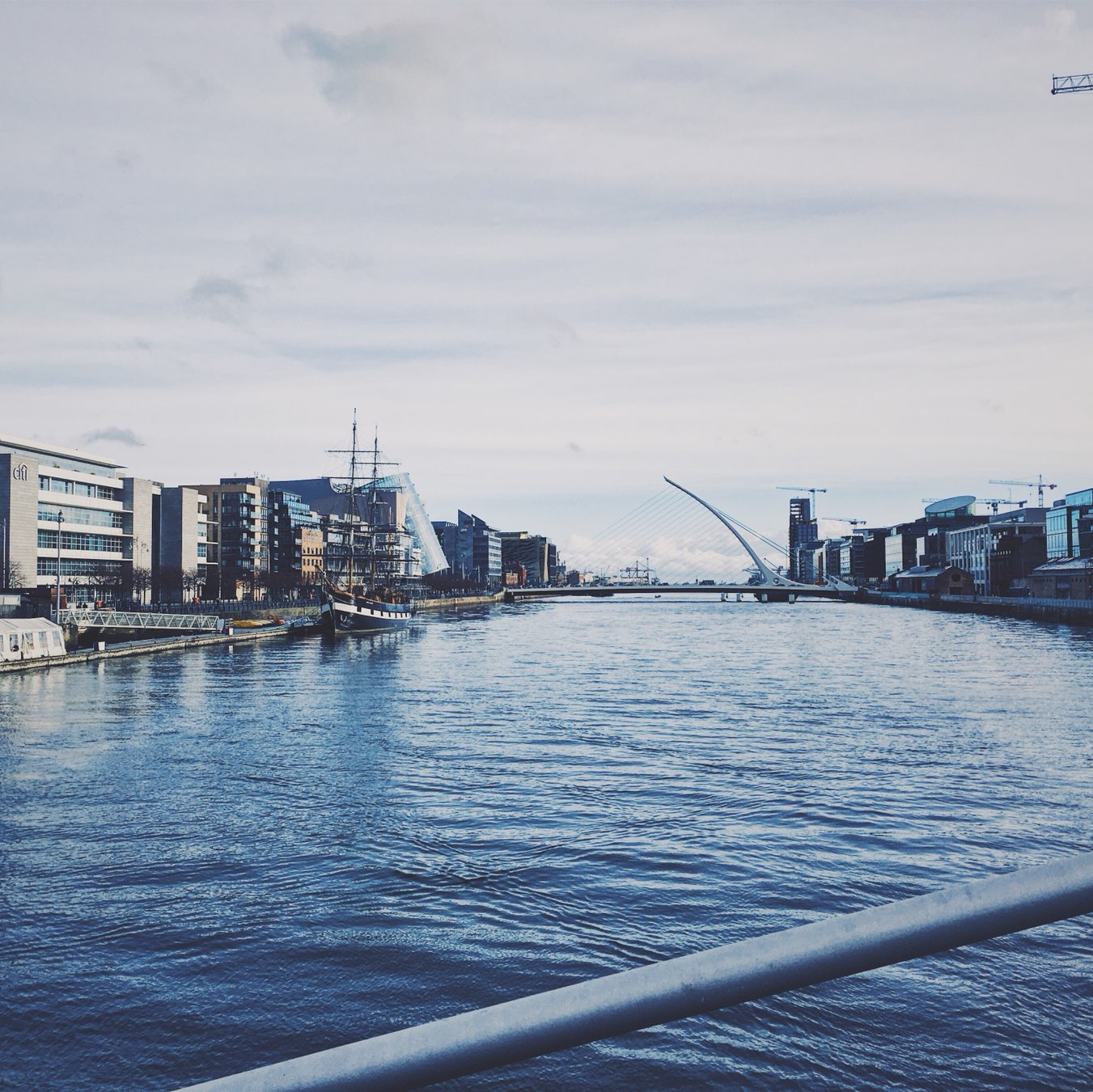
It’s April. Looking back on the beginning of the year, I’ve been going non stop, moving from the French Riviera over to Dublin, finding ourselves a flat, working on two new fast-paced projects, and planning the rest of the year.
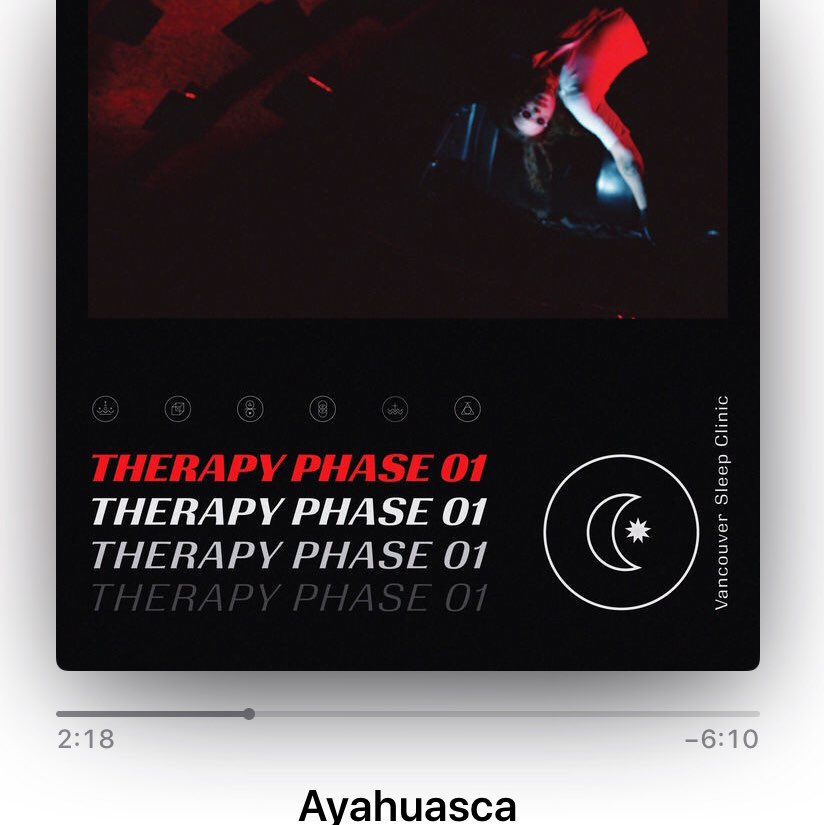
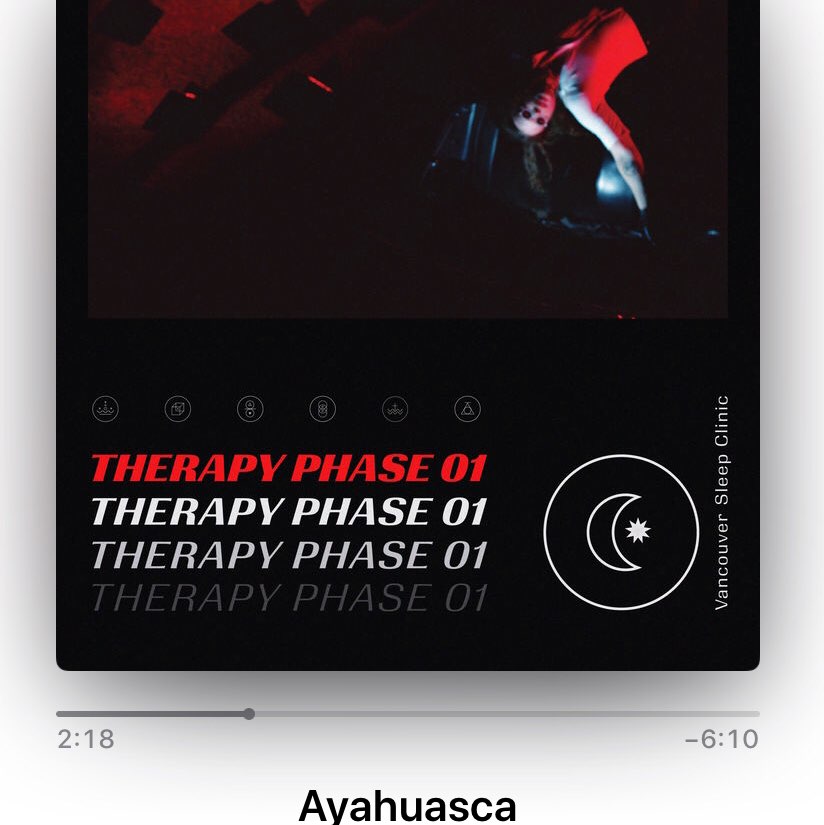
Tonight’s therapy comes from well… the Therapy EP by the always soothing Vancouver Sleep Clinic!
It’s April. Looking back on the beginning of the year, I’ve been going non stop, moving from the French Riviera over to Dublin, finding ourselves a flat, working on two new fast-paced projects, and planning the rest of the year.
Tonight’s therapy comes from well… the Therapy EP by the always soothing Vancouver Sleep Clinic!
My friend @LiamBoogar recently launched a newsletter where he tackles Branding, France, Technology, and a lot more — all through his personal and opinionated point of view.
The latest issue is really solid, and talks about Labor Laws in France and the labour market in the US. Here’s a solid gem that struck me:
”Even in the Silicon Valley, where great benefits, remote work & “unlimited vacation” are advertised on every /careers page, the reality is that “unlimited vacation” doesn’t work in a culture where taking any time off is seen as lazy.”
After our trip to Belfast during St Patrick’s day, we were eager to get out of Dublin again and explore the surrounding areas a bit more. After an evening spent on Pinterest searching for some inspiration, we decided to take a train down to Killiney, apparently a location with a beautiful viewpoint on the sea.
We started off enjoying a lovely breakfast at home — we have the same type of food throughout the work week, so weekends allow us to either go to a lovely café in the neighborhood, or fix ourselves with a little homemade goodness as the suns comes out.
After getting ready, we left the apartment around lunchtime, and realised that we’d need to get some lunch before hopping on the train. I took Shana to Honest to Goodness, an absolutely delicious sandwich place in Temple Bar. It’s a place we’ve been to once before together, and I originally found it on my own back in January. The food is very fresh and prepared as you order it, and for the price, you just can’t go wrong with that!
Having this late lunch in the city allowed us to walk through a beautifully sunny and crowded Temple Bar, before heading to the train station.
[gallery ids=“3630,3629,3631” type=“rectangular”]
We arrived at Tara Street and waited 10 minutes for the suburban DART train to arrive. Luckily, there weren’t too many people and it was easy to find seats. We knew that the trip would take around 30 minutes so Shana took out her headphones to listen to a podcast while I pulled out my Kindle to make some progress on The Expanse.
It was a very enjoyable ride as we left the city, went through different suburban towns, and ended up riding the train along the coastline, seeing the sea and a few harbours and boats along the way.
And then, we got to the Killiney Beach station.
[gallery ids=“3633,3632,3634” type=“rectangular”]
As we arrived, there were a mixture of locals and visitors getting off the train. As for us, we were essentially trying to take it all in: the station was right by the beach!
Once you leave the station, there is a little bit of a walk up the hill, without any indication, but there is also only one main road to follow, heading up. You end up walking in the shadow, on a small village road surrounded with beautiful houses overlooking the sea.
After about 15 minutes walking up, you reach a little area in the woods. We saw more people headed towards there and just followed them. And after another few minutes, we finally reached the top of the hill. Totally worth it!
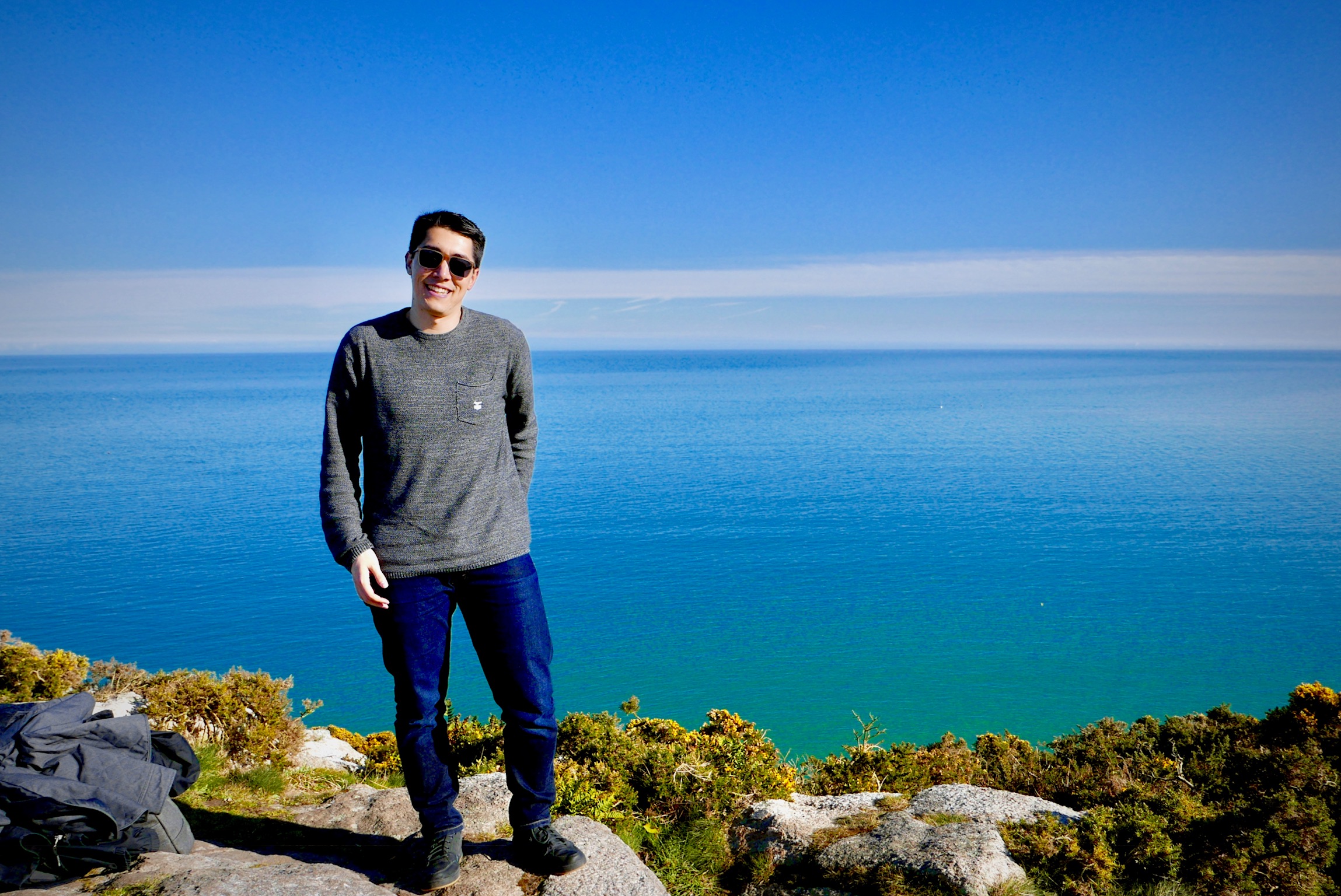
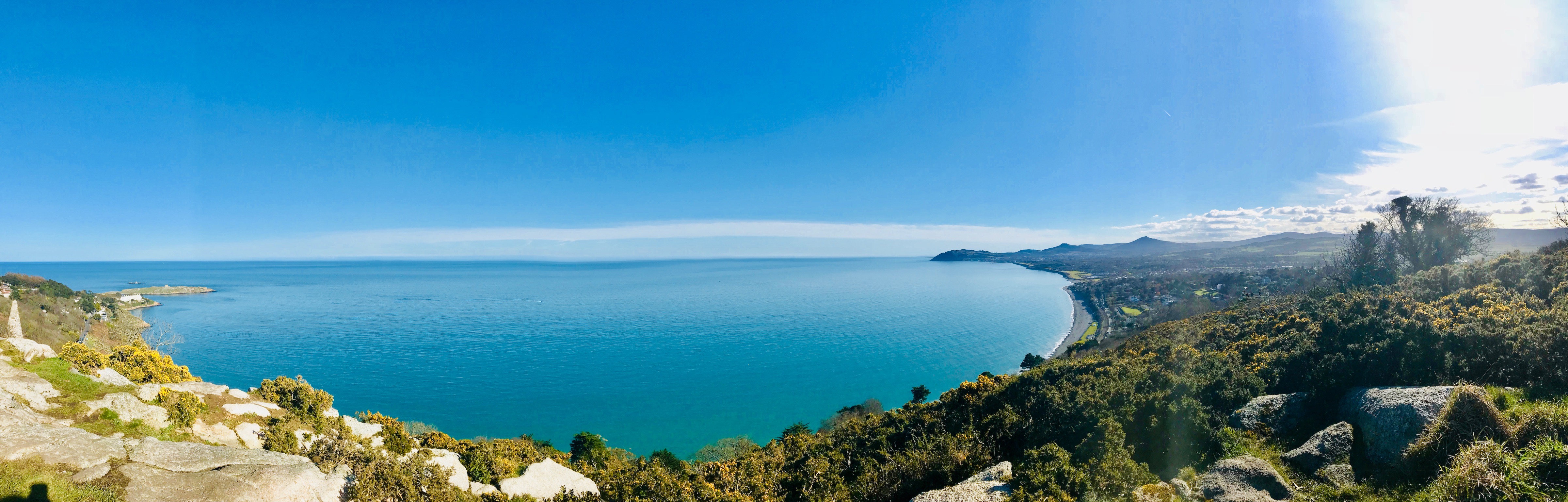
I mean look at the view:
Once you reach the top, you are standing next to a big obelisk, and benefit from a view at 360 degrees, with the eastern side by the sea on one end, and the rest of the country behind you, including a lovely view towards the city of Dublin.
After spending some time up the hill, we went back down. But instead of heading straight back home, we decided to hang out on the beach for a little bit. And had a lot of fun watching a few dogs being scared away from the waves.
Bank Holiday Monday, over St Patrick’s Day Weekend.
We left the apartment at an early 6.45am to walk towards Dublin’s Connolly station. There, we met with Shana’s coworker M and her boyfriend M.
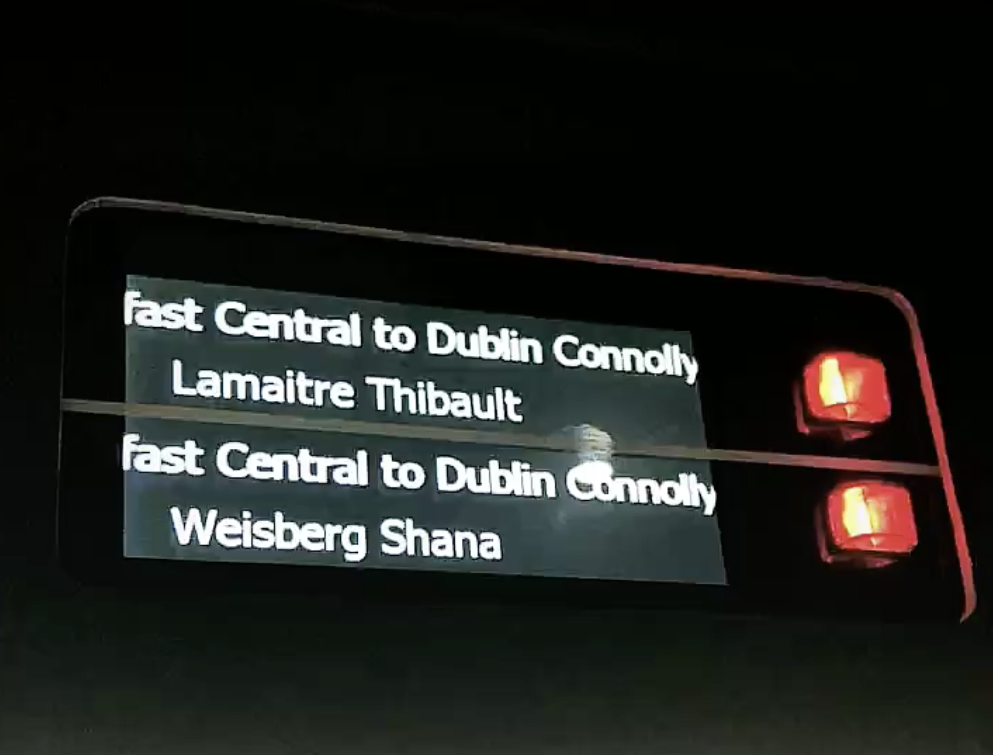
We hopped on the train and discovered that our names were appearing on a little display above our seats. Those little details can make us nerds so happy!
Over the next two hours, the duration of our trip, we spent our time talking and learning more about M&M — they are both from Sweden and arrived in Dublin about two and a half months before us. We’re still all adjusting to Ireland and life in Dublin, and it’s nice to find another foreign couple who can sympathize with us, and who we can sympathize with.
We arrived in Belfast just before 10am, ready to grab a quick bite and discover the city.
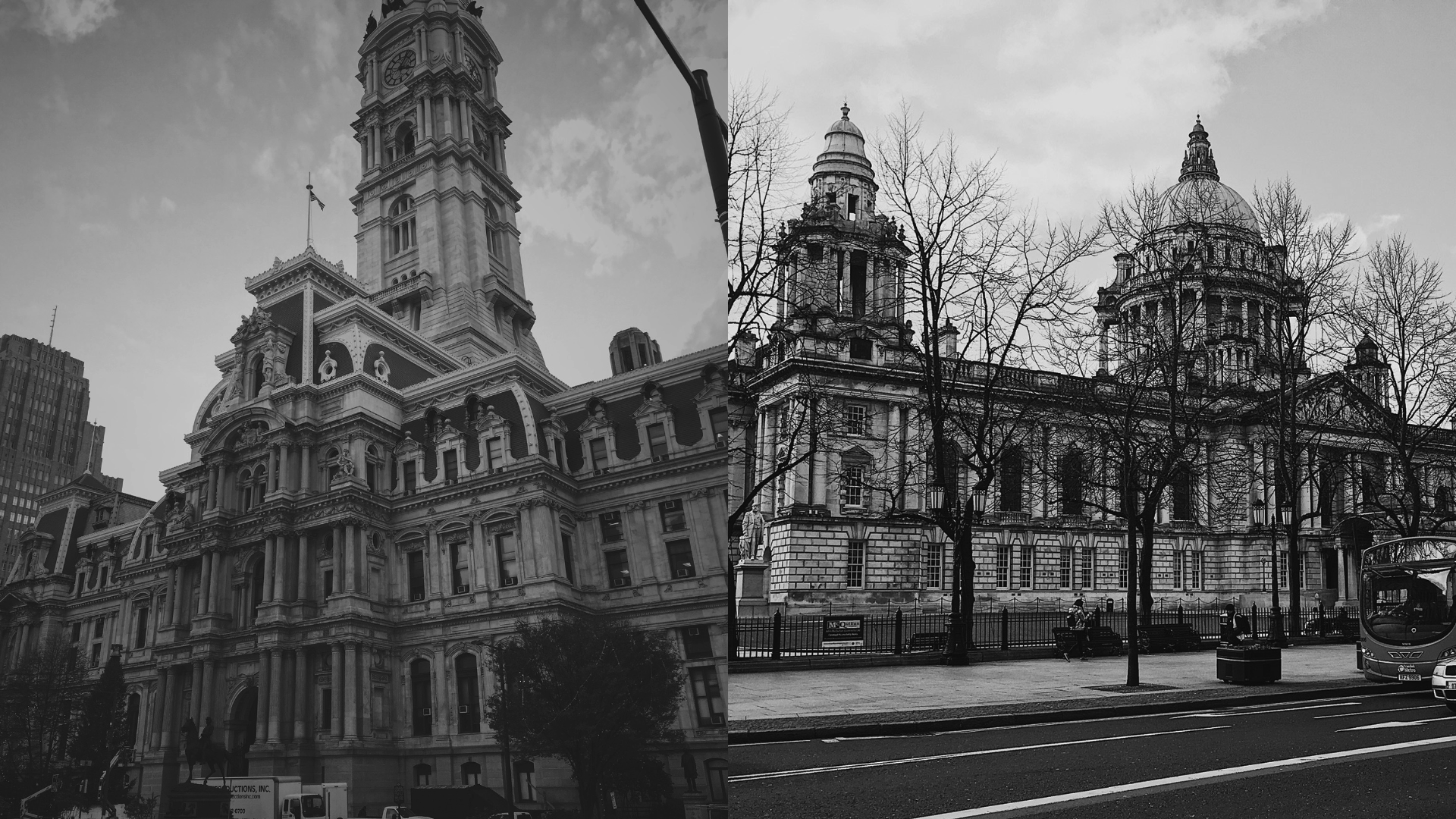
Walking from the station, we headed in direction to what seemed to us like the center of the city and ended up in front of the city council.
[gallery ids=“3600,3616” type=“rectangular”]
It actually makes a lot of sense: as we learnt throughout the day, Belfast was one of the biggest ports from which European migrants would leave for the US. As they arrived on the East Coast of the United States, they were inspired by the architecture from “back home” when designing institutions in their new lands.
Walking all around town, Shana couldn’t help but be reminded of Washington, Baltimore, Philadelphia, New York, and Boston — a comfortable little slice of home.
[caption id=“attachment_3607” align=“alignnone” width=“1920”] My original picture of the Philadelphia City Hall was in Black & White. So I added a black and white filter to the Belfast image above to compare both of those. Quite similar indeed.[/caption]
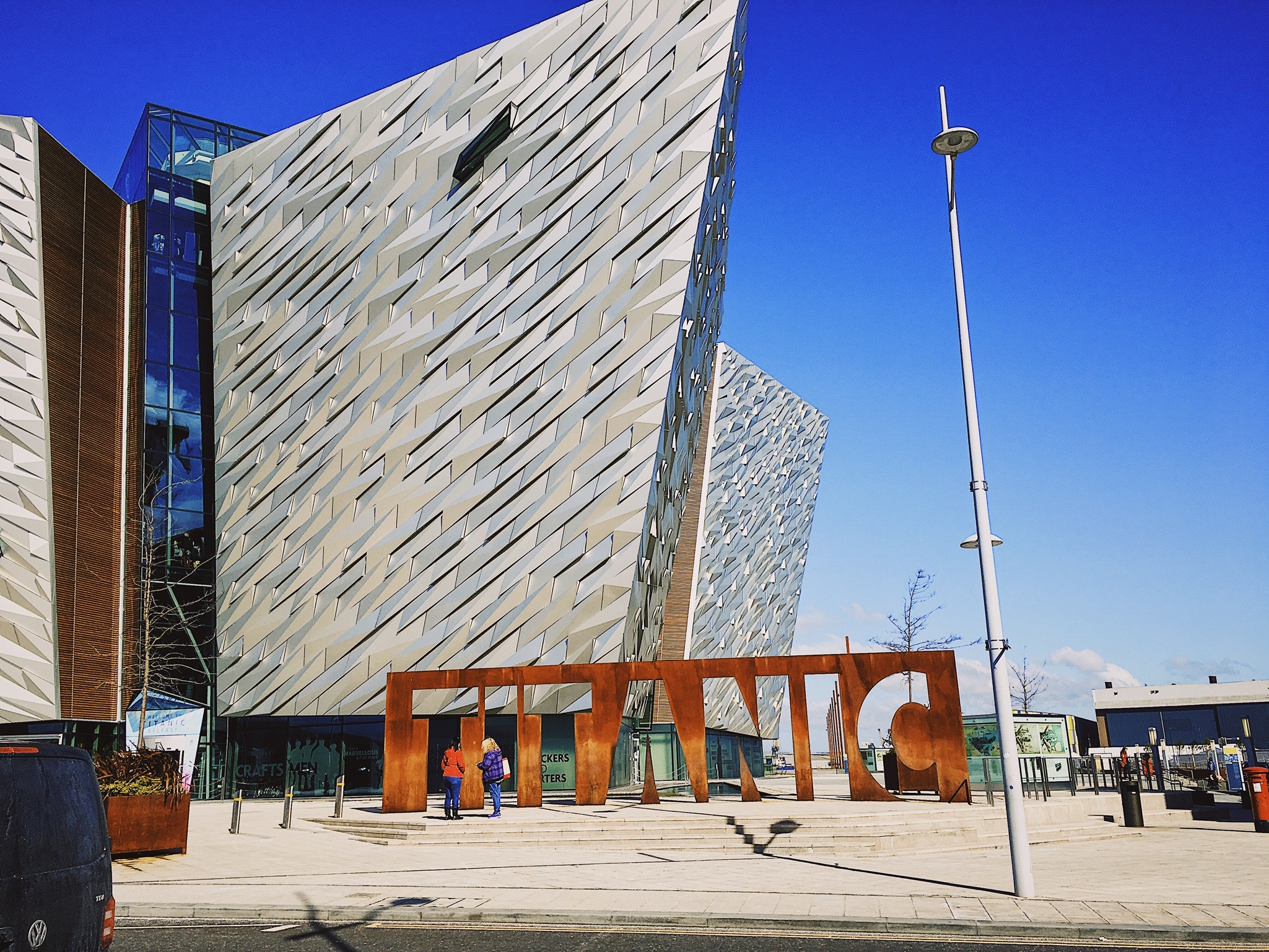
After a quick walk around the center of the city, and a pit stop to snack on some delicious crepes in a parisian café, we headed towards the harbour to visit the infamous Titanic Museum.
The museum itself is inside of a beautiful modern structure, with big aluminium panels, while there is a rusting sign outside, welcoming you as you enter the area.
Over the following two and a half hours, we learnt a lot about Belfast at the turn of the 20th century, and how it was one of the major ports from which immigrants were leaving. They were hoping to get reach the United States to start a more prosperous life for their children and themselves.
After establishing the context for the early 20th century in Belfast, we got to learn about its local industries and how big it was in terms of a ship-building area. This naturally led to the actual Titanic, the one the infamous 1997 movie is based on.
It was really impressive to see what it took to build such an immense ship. And it made it that much sadder and intense when we listened and read the actual final transmissions of the HMS Titanic, which sank on April 15, 1912.
[gallery ids=“3619” type=“rectangular”]
Thankfully, after two and half hours in the museum, the sun was still out and we walked back towards the city, discussing what we had learnt with our new swedish friends.
We were all starting to be pretty hungry as the clocks reached 2PM and found a lovely gastropub called The Cloth Ear. We were expecting your regular burger and chips, but the menu looked really original. And when our plates arrived, we were just extatic.
[gallery ids=“3623,3622” type=“rectangular”]
After lunch, we spent the last remaining hours walking in the sunny and windy streets of the old town, telling ourselves that we’ll need to be back around the summer to enjoy what seems to be a potentially vibrant summer nightlife.
Belfast was full of hidden bars nested in smaller alleys off from the high street, just the type of place we like to hang out at when the days are warmer.
This was a very quick trip, but one that left us wanting to experience more. We’ll be back, Belfast!
This bill is the CLOUD Act. It was never reviewed or marked up by any committee in either the House or the Senate. It never received a hearing. It was robbed of a stand-alone floor vote because Congressional leadership decided, behind closed doors, to attach this un-vetted, unrelated bill to the $1.3 trillion government spending bill.
The CLOUD Act is a far-reaching, privacy-upending piece of legislation that will:
Enable foreign police to collect and wiretap people’s communications from U.S. companies, without obtaining a U.S. warrant.
Allow foreign nations to demand personal data stored in the United States, without prior review by a judge.
Allow the U.S. president to enter “executive agreements” that empower police in foreign nations that have weaker privacy laws than the United States to seize data in the United States while ignoring U.S. privacy laws.
Allow foreign police to collect someone’s data without notifying them about it.
Empower U.S. police to grab any data, regardless if it’s a U.S. person’s or not, no matter where it is stored.
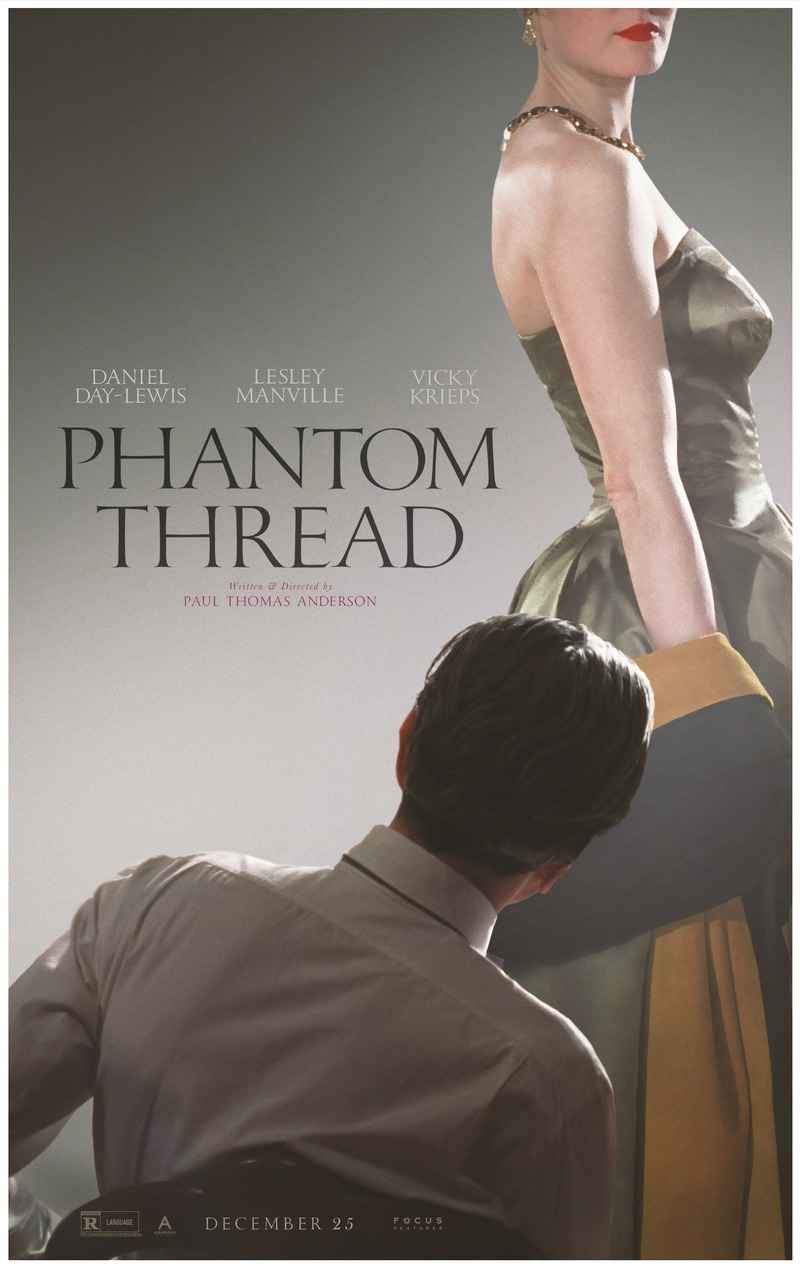
If we’re to rate this movie in itself, based on the technique, the depth of its characters, and the story, we’re talking about a 4.5/5.
Personally, I’d rate it a 4, just because the story is less compelling to me.
In any case, this is a really intense role for Daniel Day-Lewis who inhabits the character of Reynald Woodcock perfectly. The lead female character of Alma is also played incredibly well. The dynamic of power between these characters, and the complexity of their relationship is really well depicted and provides interesting contrasts. Between a creative man consumed by his work and who has to stay in control at all times, and his muse, who appears frail at first but develop a quiet strength overtime.
Watching this movie has me thinking deeply about the state of my own relationship and its dynamic. Introspection is one of the best things that art can bring out, when it has a purpose. Not all art needs to be purposeful, but this film by PTA definitely bring out something unique.
“I think Twitter is going to have a good year in 2018, while Facebook has a bad one.”
It’s not that crazy to think about. And to some extent, this is already happening.
But to capitalise on this, Twitter will first have to tackle its harassment, hate-speech, and nazi problems. From there, they should be able to focus on their strengths: becoming the “public forum” it was meant to be and honing in on being the bets platform for breaking news and sports/global events.
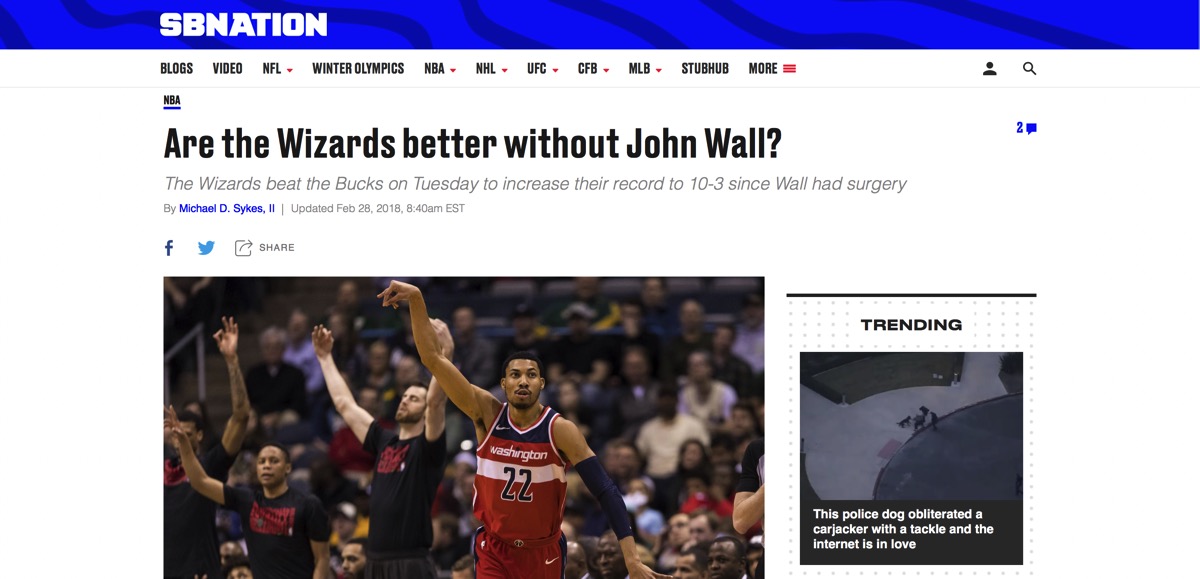
Completely agree with this @SBNation / @BulletsForever article about the Wizards “without John Wall":
”Asking whether the team is better without Wall misses the mark. What’s more important here is that this is the best team he’s ever played on, and that bodes well for the Wizards’ immediate and long-term future.”
Completely agree with this @SBNation / @BulletsForever article about the Wizards “without John Wall":
> ”Asking whether the team is better without Wall misses the mark. What’s more important here is that this is the best team he’s ever played on, and that bodes well for the Wizards’ immediate and long-term future.”
”Working while traveling is a tactic many use to keep their wanderings going longer, hence the trend of digital nomads. But intentionally choosing to forgo money—rather than just running out of it while on the road—are two different things. And while some who crowdfund (or beg) their own travel may claim to have charitable leanings, the common thread among these free-loading wanderers is that they have a choice in the matter.”
> ”Working while traveling is a tactic many use to keep their wanderings going longer, hence the trend of digital nomads. But intentionally choosing to forgo money—rather than just running out of it while on the road—are two different things. And while some who crowdfund (or beg) their own travel may claim to have charitable leanings, the common thread among these free-loading wanderers is that they have a choice in the matter.”
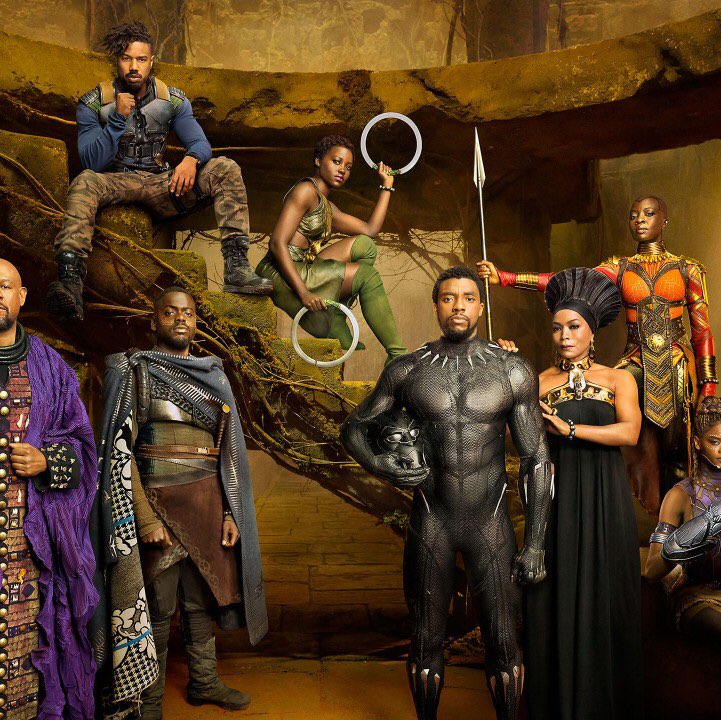
Another thoughtful piece on Black Panther over at The Atlantic:
Black Panther is a love letter to people of African descent all over the world.
Analyzing the tragedy of Erik Killmonger, the film’s main antagonist:
The part of Killmonger that makes him a supervillain is not the part of him that is African.
Indeed the fact that this character has so much interesting backstory, and a complex logic that is the result of his environment makes Killmonger the most interesting villain I’ve seen in a blockbuster since The Joker in Nolan’s The Dark Knight back in 2008.
Killmonger’s ascension and death is the event that catalyzes Wakanda’s redemption from its greatest failure, and his death ensures that unlike Loki, Thanos, the Red Skull, or any other of Marvel’s endless stable of world-conquering despots, the pathos of his tragic end cannot be infinitely repeated as farce. His death not only matters, it is also why he matters more than all the rest of them.
While his logic made sense, once he got in power, Killmonger’s motivation and reasoning shifted to a more cruel and one. However, his legacy in this fictional world is real and will have an impact on the rest of the Marvel Cinematic Universe.
Like I mentioned previously, it’s no small feat to offer such a complex work from a mainstream blockbuster that will eventually make all the money. Thank you Mr Coogler!
I’ve been catching up on a lot of Wakanda-related reading over the past week. This one from The New Yorker makes a series of great points:
“There is a fundamental dissonance in the term “African-American,” two feuding ancestries conjoined by a hyphen. That dissonance—a hyphen standing in for the brutal history that intervened between Africa and America—is the subject of “Black Panther,” Ryan Coogler’s brilliant first installment of the story of Marvel Comics’ landmark black character.”
”Coogler told Marvel upfront that his version of the story would remain true to those political elements. It is shot through with the sense of longing and romance common to the way that people of a diaspora envision their distant homeland.”
This last part above is something I can identify with, and something that I have found with manychildren and grandchildren of immigrants too!#
The article goes on…
”Wakanda is no more or less imaginary than the Africa conjured by Hume or Trevor-Roper, or the one canonized in such Hollywood offerings as “Tarzan.” It is a redemptive counter-mythology.”
”The film is not about world domination by an alien invasion or a mad cabal of villains but about the implications of a version of Western domination that has been with us so long that it has become as ambient as the air.”
The really good point that the author makes is that while Wakanda is a fictional place, so is the western idea and portrayal of the African continent and its countries, cultures, and inhabitants.
”Marvel has made a great many entertaining movies in the past decade, but Ryan Coogler has made a profound one.”
Taking a step back, it is incredibly wild that a mainstream superhero blockbuster has so much conversation around it. It’s really a sign of the incredible talent displayed by Ryan Coogler, and his team of writers and actors to be able to give so much depth to the first Blockbuster of 2018!
Another thoughtful piece on Black Panther over at The Atlantic:
> Black Panther is a love letter to people of African descent all over the world.
Analyzing the tragedy of Erik Killmonger, the film’s main antagonist:
> The part of Killmonger that makes him a supervillain is not the part of him that is African.
Indeed the fact that this character has so much interesting backstory, and a complex logic that is the result of his environment makes Killmonger the most interesting villain I’ve seen in a blockbuster since The Joker in Nolan’s The Dark Knight back in 2008.
> Killmonger’s ascension and death is the event that catalyzes Wakanda’s redemption from its greatest failure, and his death ensures that unlike Loki, Thanos, the Red Skull, or any other of Marvel’s endless stable of world-conquering despots, the pathos of his tragic end cannot be infinitely repeated as farce. His death not only matters, it is also why he matters more than all the rest of them.
While his logic made sense, once he got in power, Killmonger’s motivation and reasoning shifted to a more cruel and one. However, his legacy in this fictional world is real and will have an impact on the rest of the Marvel Cinematic Universe.
Like I mentioned previously, it’s no small feat to offer such a complex work from a mainstream blockbuster that will eventually make all the money. Thank you Mr Coogler!
I’ve been catching up on a lot of Wakanda-related reading over the past week. This one from The New Yorker makes a series of great points:
> “There is a fundamental dissonance in the term “African-American,” two feuding ancestries conjoined by a hyphen. That dissonance—a hyphen standing in for the brutal history that intervened between Africa and America—is the subject of “Black Panther,” Ryan Coogler’s brilliant first installment of the story of Marvel Comics’ landmark black character.”
> ”Coogler told Marvel upfront that his version of the story would remain true to those political elements. It is shot through with the sense of longing and romance common to the way that people of a diaspora envision their distant homeland.”
This last part above is something I can identify with, and something that I have found with manychildren and grandchildren of immigrants too!#
The article goes on…
> ”Wakanda is no more or less imaginary than the Africa conjured by Hume or Trevor-Roper, or the one canonized in such Hollywood offerings as “Tarzan.” It is a redemptive counter-mythology.”
> ”The film is not about world domination by an alien invasion or a mad cabal of villains but about the implications of a version of Western domination that has been with us so long that it has become as ambient as the air.”
The really good point that the author makes is that while Wakanda is a fictional place, so is the western idea and portrayal of the African continent and its countries, cultures, and inhabitants.
> ”Marvel has made a great many entertaining movies in the past decade, but Ryan Coogler has made a profound one.”
Taking a step back, it is incredibly wild that a mainstream superhero blockbuster has so much conversation around it. It’s really a sign of the incredible talent displayed by Ryan Coogler, and his team of writers and actors to be able to give so much depth to the first Blockbuster of 2018!
2017 was another stellar year for Bandcamp, with double digit growth in every aspect of the business. (…)
Meanwhile, standalone music streaming companies continued to lose money in 2017, and industry-wide record sales continued to decline. (…)
Allowing the distribution of an entire art form to be controlled by so few has troubling implications, and those continued to play out in 2017.
> 2017 was another stellar year for Bandcamp, with double digit growth in every aspect of the business. (…)
> Meanwhile, standalone music streaming companies continued to lose money in 2017, and industry-wide record sales continued to decline. (…)
> Allowing the distribution of an entire art form to be controlled by so few has troubling implications, and those continued to play out in 2017.
Data privacy is not like a consumer good, where you click “I accept” and all is well. Data privacy is more like air quality or safe drinking water, a public good that cannot be effectively regulated by trusting in the wisdom of millions of individual choices. A more collective response is needed.
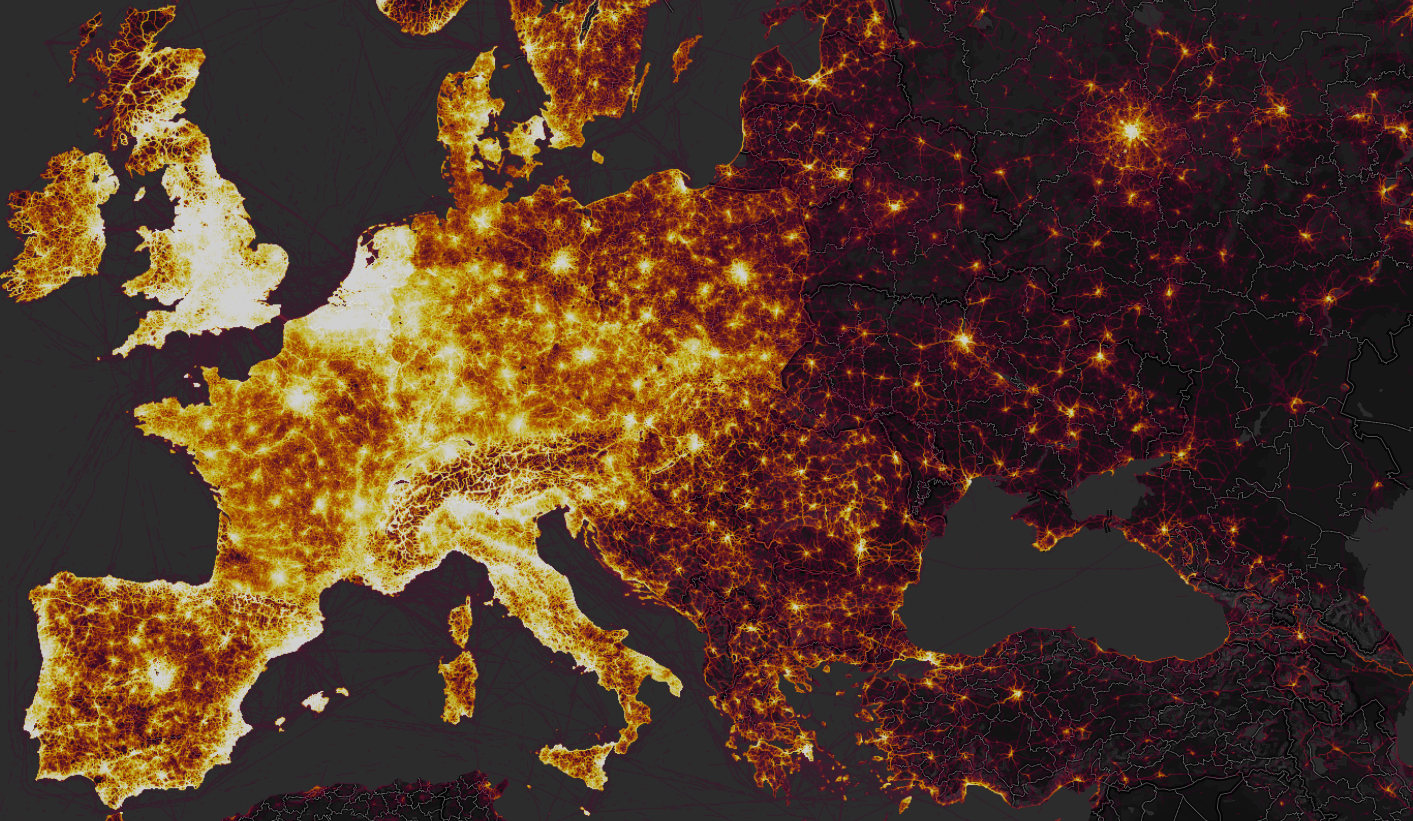
This week’s data/privacy debacle has to do with Strava’s heat map. To sum it up quickly: Strava is a really good app to track your workouts, runs, and bike rides. However, they published a heat map of their users' activities around the world, which also showed suspected military bases in war zones around the world. We’re talking American bases in the Middle East, but there seems to be rumoured bases of other countries, like Russia, the UK, France, and more.
To me this highlights growing concerns that the Indie Web and Tech community has tried to voice for years: the collection of data by corporations offering a free service. And the lack of knowledge that the users may have about where their data is going and how it’s being used.
If you're not paying for it, you're the product
A few years ago, I was an employee for a small app development studio. Working there opened my eyes on the reality that unfortunately, most people would rather get an app for free, subsidised by ads and relinquishing a little bit of their data and privacy rather than paying the $0.99 - $1.99 - $2.99 barrier of entry.
What started as a worrying trend became the norm, and soon, it became evident that mobile ecosystems were turning into a hard market for independent software businesses.
But this behavior has turned into a bigger issue where we tend to refuse paying for digital products —unless they’re Netflix or Spotify. And in both cases, we’ve seen examples of these companies using the data for uncomfortable ads.
On the individual level, I think we’re too eager to get a service — and yes, feel free to blame marketing — prior to understanding the consequences a free product can have with our data. On the other hand, it’d be nice to start seeing corporations be more vocal about the data they collect and the reasons as to why they’re collecting it. I’d love to see an “opt-out by default” mentality where companies use a simple onboarding process to explain what they do with it.
And, as a consumer, I’d love to get a way to use current free services for a fee if it meant getting rid of ads and keeping my data safe. Even at a symbolic $1.5 - 2/month, Facebook would make more money than it does selling ads:
In Q3 2016, it was reported that the average revenue per user was $4.01 — or just over $1/user/month. With a growing community of over 2 Billion users, this would be an easy way to offer an alternative for the users who want and can afford this change.
Even I’m still sceptical, I really hope that the Strava heatmap fiasco will bring a more positive outcome on the data-collection debate. Privacy is important, and it’s not quite dead yet, so let’s try to preserve it, and ourselves, as much as we can.
“If you go to New York and want to meet a big company such as Budweiser you are just one of a thousand firms pitching to them, whereas if you got to Tokyo and seek a meeting with Nissan you might be the only Irish company and one of only a handful from Europe knocking at their door”
My friend Eamonn is in Dublin this evening and I’m well excited to catch-up. Ahead of his talk, he’s had a chat with the Irish Time about the potential of going towards Asia instead of Silicon Valley.
Aside from work and prospecting for new clients, possibly jobs too, this week has revolved around a lot of walking in the different neighborhoods of the city centre, searching for and viewing apartments…

 My original picture of the Philadelphia City Hall was in Black & White. So I added a black and white filter to the Belfast image above to compare both of those. Quite similar indeed.[/caption]
 Titanic Belfast[/caption]